

Image-Based Comprehension – Y1/Y2 – Classroom
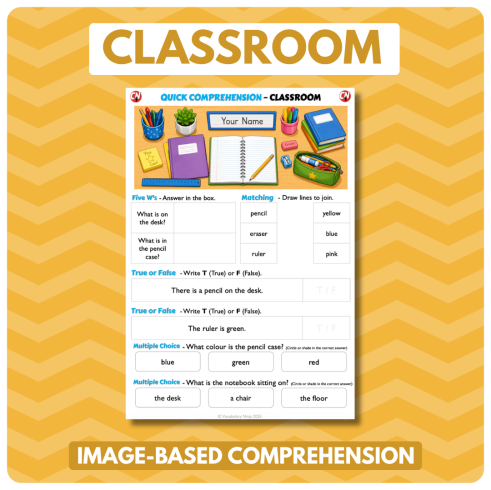
Image-Based Comprehension – Y1/Y2 – Classroom
£0.99
Build essential comprehension skills through images.
Image-Based Comprehension helps pupils develop retrieval, skimming and scanning skills without the additional demands of reading a full text.
Pupils explore a detailed, information-rich image before answering a range of accessible comprehension questions, helping them learn how to locate information, identify key details and retrieve accurate answers.
Perfect for building confidence, developing early comprehension behaviours and supporting pupils who find traditional reading comprehension challenging.
Develop comprehension skills – without the reading barrier.
Image-Based Comprehension provides pupils with a different way to practise the essential skills that underpin successful reading comprehension.
Instead of beginning with a written passage, pupils are presented with a detailed, information-rich image containing signs, labels, prices, objects and visual clues. They must skim and scan the image, locate relevant information and retrieve the details needed to answer each question.
By reducing the amount of continuous text pupils need to decode and process, the resource allows them to focus more closely on the comprehension process itself.
Each worksheet provides opportunities to practise:
- Retrieving information accurately
- Skimming and scanning to locate key details
- Identifying relevant information
- Matching information across an image
- Answering Five Ws questions
- Completing True or False statements
- Responding to multiple-choice questions
- Building confidence before progressing to more demanding text-based comprehension
The familiar, real-world scenes also give pupils a clear purpose for reading and retrieving information, helping them understand that comprehension is about finding, processing and using information – not simply reading words on a page.
Ideal for whole-class teaching, intervention, independent practice, SEND support, early readers and pupils who need additional opportunities to develop retrieval skills.
See it. Scan it. Find it. Answer it.



New Products
-
 £1.99
£1.99 -
 £1.99
£1.99 -
 £1.99
£1.99
On Sale
-
Sale!
 Original price was: £349.86.£262.40Current price is: £262.40.
 -
Sale!
 Original price was: £4.99.£4.49Current price is: £4.49.
 -
Sale!
 Original price was: £738.56.£529.99Current price is: £529.99.