

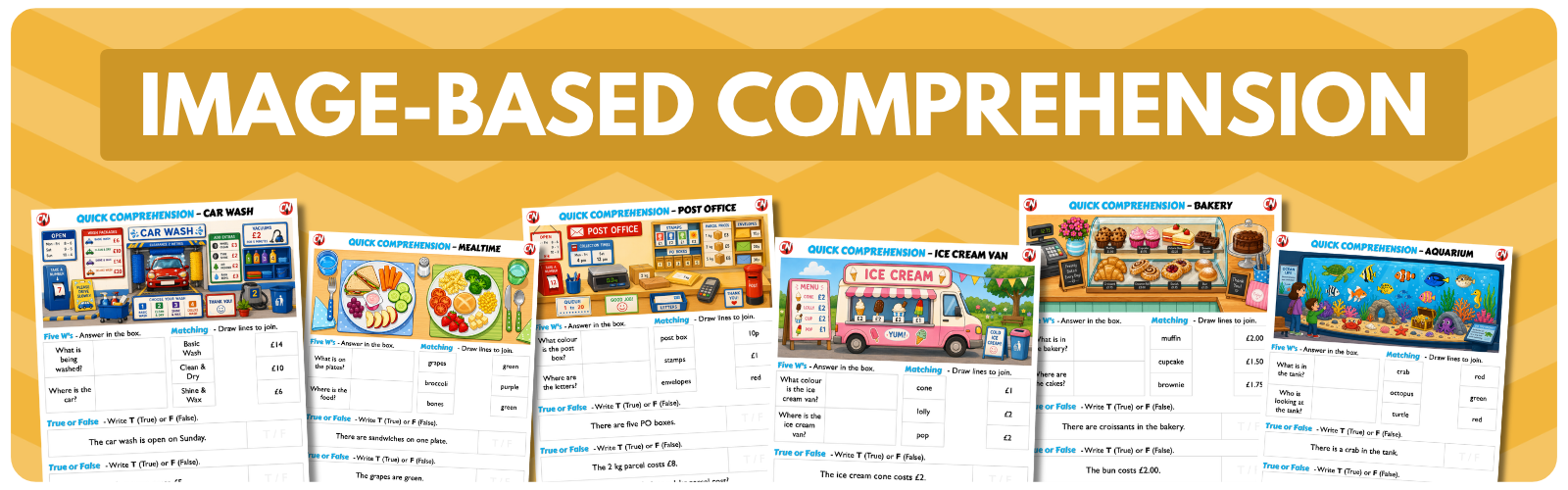
Build comprehension skills without the reading barrier.
Skim • Scan • Retrieve • Understand
Image-Based Comprehension helps pupils develop the essential skills of skimming, scanning and retrieving information through engaging, information-rich images.
By reducing the demands of decoding and continuous text, pupils can focus on the comprehension process itself – finding relevant information, making connections, cross-referencing details and answering questions accurately.
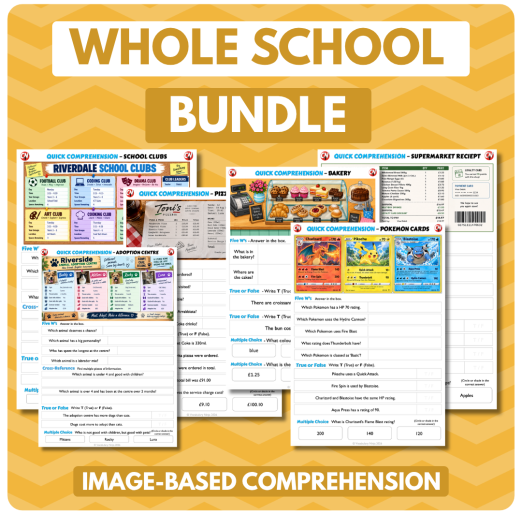
The Whole School Bundle brings together all 60 resources from Year 1 to Year 6, providing a clear progression in comprehension skills across the primary years. It’s also the best-value way to access the complete collection – just £39.99 for all three bundles, compared with £44.97 when purchased separately.
One complete collection. 60 resources. Progression from Year 1 to Year 6.
JUMP TO THE RESOURCES YOU NEED…
Download a Free Sample…
What is Image-Based Comprehension?
Image-Based Comprehension is designed to develop the skills of comprehension without placing the full demands of reading on the pupil.
Traditional reading comprehension asks pupils to manage several processes at the same time. They need to decode and read the text, understand vocabulary, retain information, interpret the question, locate relevant details and formulate an answer.
For developing readers, the reading itself can become the barrier.
Image-Based Comprehension reduces that barrier.
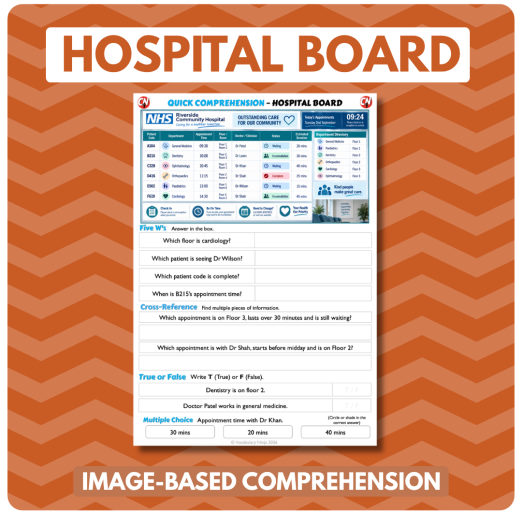
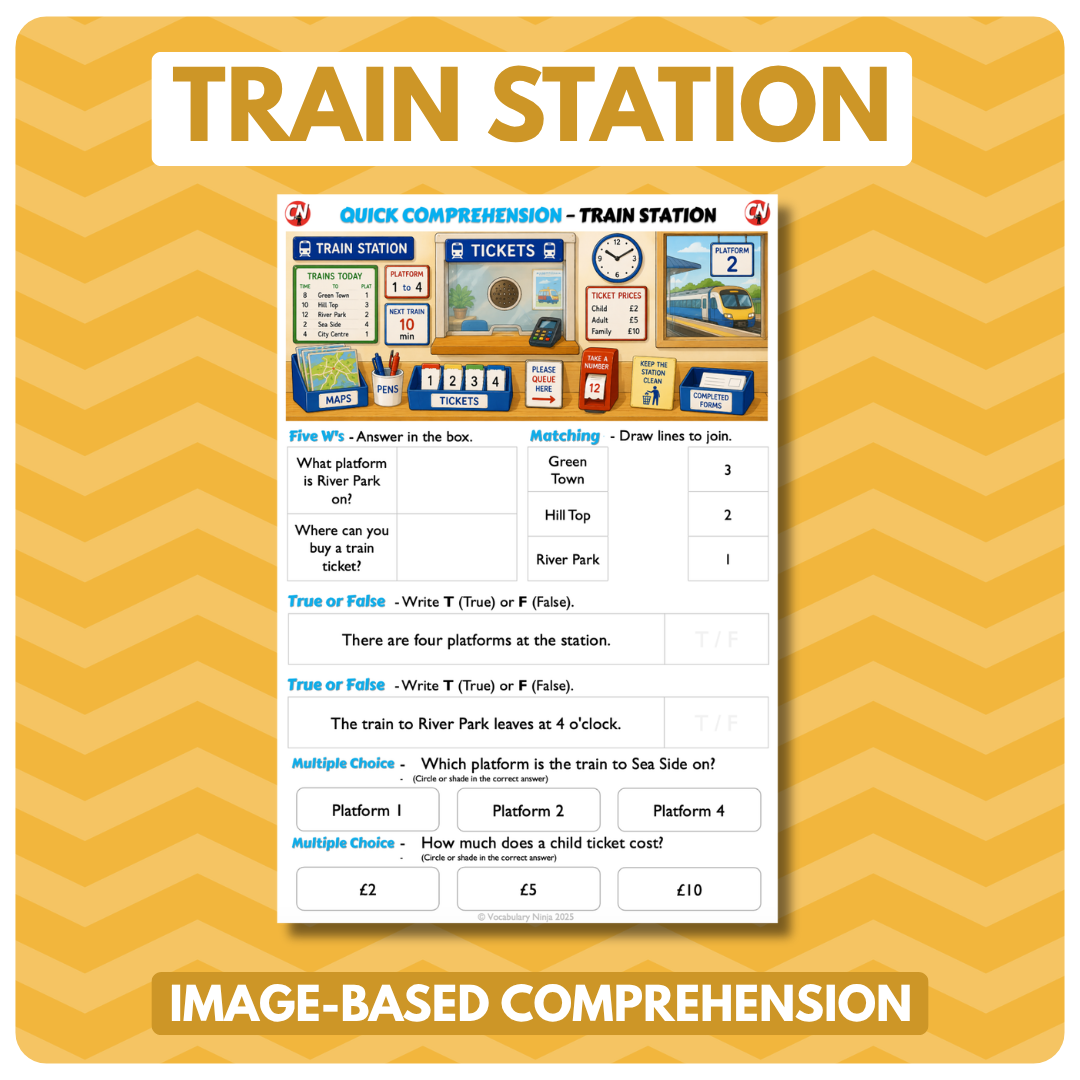
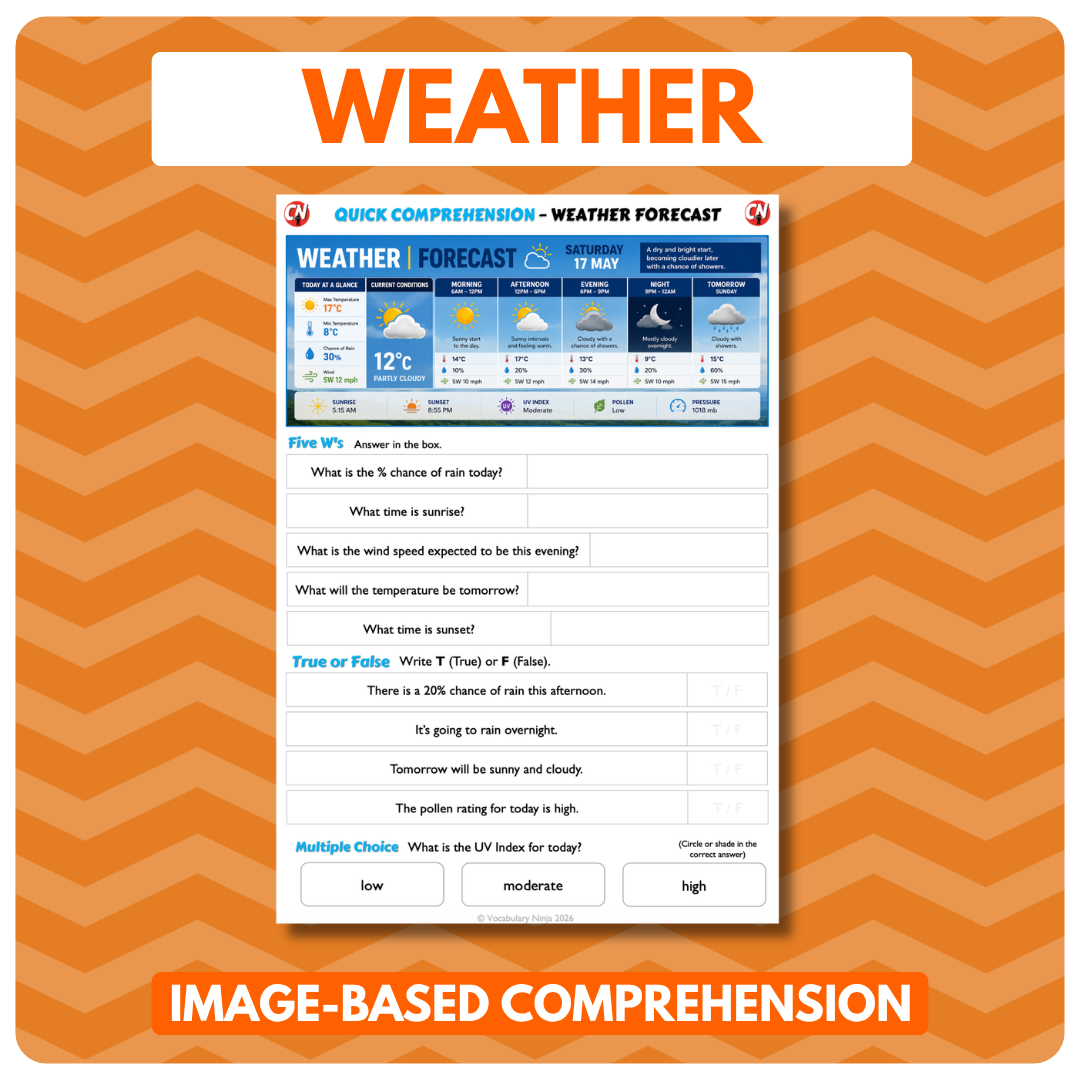
Instead of beginning with a continuous written text, pupils explore a detailed, information-rich image based around an engaging and familiar setting. Signs, labels, prices, objects, characters and other visual information provide everything pupils need to answer the questions.
Pupils still need to look carefully, understand the question, decide what information they need, locate it and retrieve it accurately – but they can practise these important comprehension behaviours with a significantly reduced reading load.
The result is an accessible and engaging way to build the foundations of successful reading comprehension.
SEE IT
Explore the image and understand the setting, information and details that are available.
SCAN IT
Search purposefully across the image for the information needed to answer a particular question.
FIND IT
Identify the specific detail, label, object or piece of information that provides the answer.
ANSWER IT
Retrieve the information accurately and use it to give an appropriate response.
These are the same fundamental behaviours pupils need when working with written texts – understanding what they are looking for, navigating information efficiently and retrieving the right evidence.
Why use images to teach comprehension?
For some pupils, it can be difficult to determine whether they are struggling with comprehension or struggling with the reading required to access the comprehension task.
Image-Based Comprehension gives teachers another way to explore and develop those skills.
By reducing the amount of continuous text pupils need to process, teachers can place greater emphasis on the comprehension process itself.
Pupils can develop their ability to:
- skim and scan information efficiently;
- locate specific details;
- distinguish between relevant and irrelevant information;
- retrieve information accurately;
- interpret different question types;
- make connections between a question and the information available;
- check their answers against the source;
- and build confidence in tackling comprehension activities independently.
Importantly, Image-Based Comprehension isn’t intended to replace reading. It provides another route into comprehension, helping pupils understand and practise the processes they can then transfer to sentences, paragraphs and increasingly demanding texts.
Comprehension for every stage
Image-Based Comprehension is organised into three progressive collections:
Year 1 & Year 2 – establishing the foundations of looking, locating, scanning and retrieving.
Year 3 & Year 4 – developing greater independence and confidence when navigating information.
Year 5 & Year 6 – applying established comprehension behaviours to increasingly detailed and demanding visual information.
The complexity develops, but the principle remains the same: